Years ago, our family was traveling in Rome when one of our sons noticed a poor woman on the street. He gave her some money and then turned to us and asked for more so he could give her more.
It was a small moment. There was no discussion beforehand about generosity. No reminder to pay attention to the people around us. No parenting lesson delivered on a street corner in Rome.
He saw someone in need and responded.
I don’t remember the lesson where we taught him that.
But there probably wasn’t one lesson. There were hundreds.
That’s the thing about family culture. So much of what we teach our children has very little to do with what we intentionally sit down to teach them. They learn from what they see us do over and over again. They notice what gets our attention, what earns our praise, what we correct, what we overlook, and what simply becomes normal in our homes.
As leaders, we know culture works the same way.
We Are Always Teaching What’s Normal
I’ve often said, “What’s rewarded is repeated.”
We understand this at work. If collaboration is rewarded, people collaborate. If results are rewarded regardless of how they’re achieved, people quickly learn that results matter more than behavior. If leaders say they value innovation but punish every failed attempt, people learn that playing it safe is really what’s expected.
What’s rewarded is repeated because what we reinforce teaches people what matters.
The same thing happens at home.
Reward doesn’t always mean a prize, money, or even praise. Sometimes reward is simply what gets noticed, affirmed, welcomed, and reinforced. Over time, those repeated behaviors stop feeling like rules and start feeling like culture.
The opposite is true, too. What we tolerate teaches. What we ignore teaches. What we model teaches. And what we repeat, day after day, eventually teaches the people around us, This is just what we do here.
If disrespect consistently goes unaddressed, that teaches something. If one person quietly carries the load for everyone else, that teaches something. If no one apologizes when they’re wrong, that teaches something. If our phones consistently receive more of our attention than the people sitting across from us, that teaches something too.
We are always teaching what’s normal.
When the Lesson Becomes a Habit
I see this in much smaller moments with my sons, too.
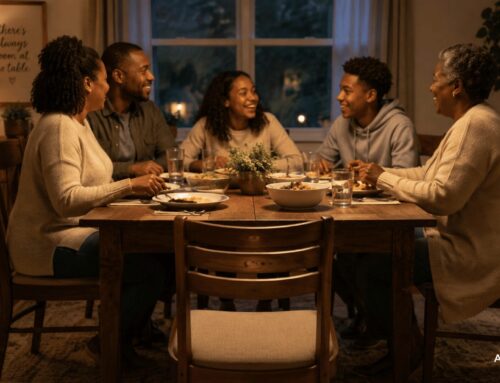
When we sit down to eat, hands reach for one another before we say grace. No one needs to explain what happens next. It’s simply part of the rhythm of our family.
I’ve also watched my sons finish a meal as guests in someone else’s home and begin picking up dishes. No one has to whisper, “Help clear the table.” They just do it.
Those moments make me smile because they remind me that culture is not what we say we value. It’s what eventually becomes instinctive.
Culture is what remains when nobody has to remind you anymore.
Of course, not everything we model is something we want repeated. That’s where this gets uncomfortable.
Our families are also watching how we respond when we’re tired. How we speak to people when we’re frustrated. Whether we apologize after we’ve handled something poorly. How we talk about people when they aren’t in the room. Whether we rest or wear exhaustion like a badge of honor. How we respond when plans change, when money gets tight, when somebody disappoints us, or when life simply doesn’t go our way.
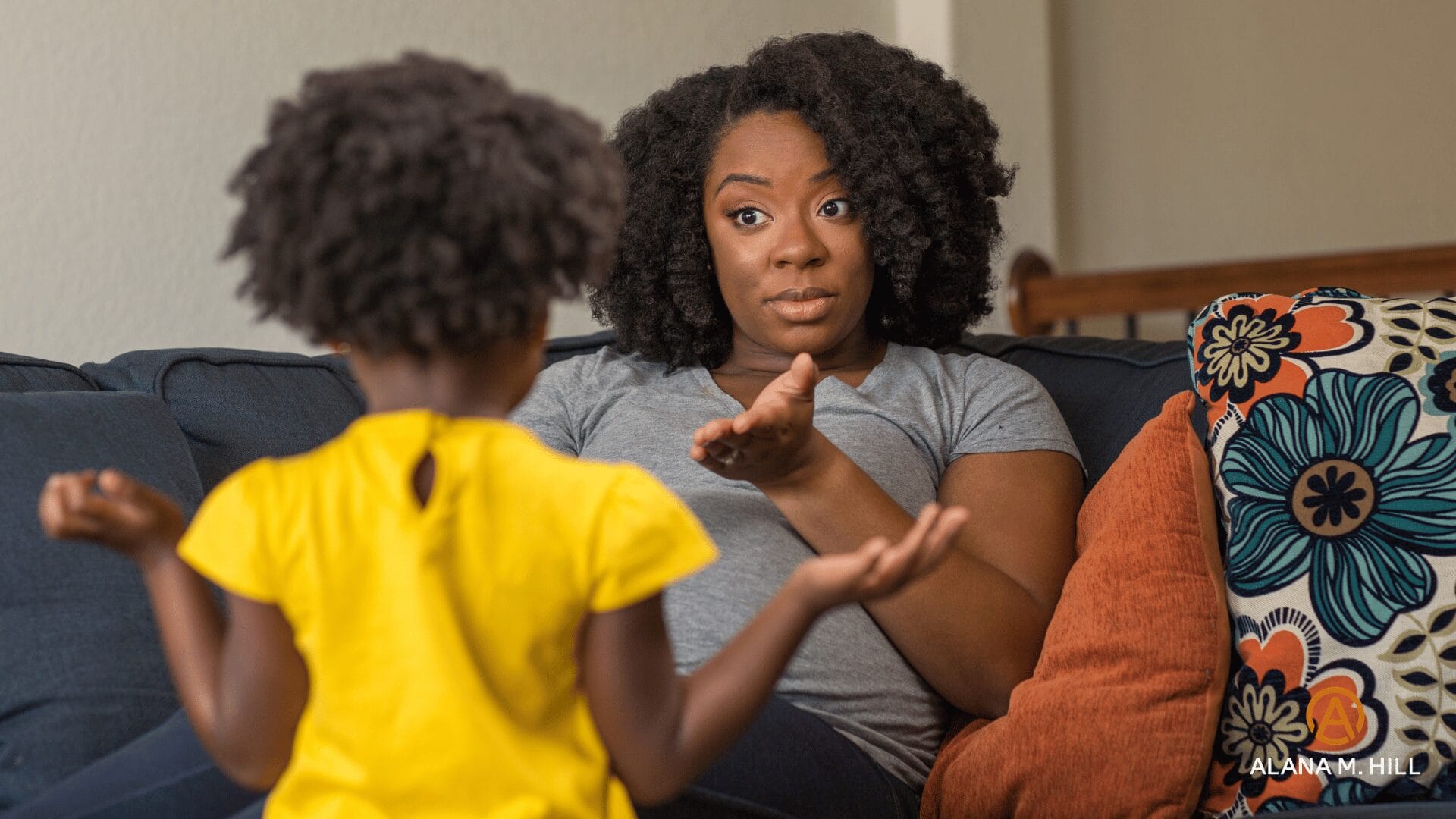
We may never gather everyone around the table and announce, “Today I’m going to teach you how to handle disappointment.”
We don’t have to.
We’re already teaching it.
Everyday Leadership Becomes Legacy
When we think about legacy, it’s easy to think about the big things. The education we provided. The opportunities we created. The traditions we established. The faith and values we intentionally tried to pass down.
Those things matter.
But I’m increasingly convinced that much of our legacy is built in much smaller moments.
It’s built in the way we greet people. The way we serve. The way we contribute without being asked. The way we respond to someone who needs help. The way we make room for people who are different from us. The way we listen when someone is trying to tell us something without quite having the words. The way we disagree and still leave room at the table.
Our children may not reproduce our lives. In fact, as I’ve reflected throughout this series, healthy family leadership requires us to make room for the reality that they probably won’t. They will make different choices, pursue different paths, develop their own convictions, and build families and lives that reflect who they are.
Legacy isn’t creating smaller versions of ourselves.
It’s seeing the values we tried to live show up in the lives they choose to build.
Maybe that’s why that moment in Rome stayed with me. I wasn’t watching my son follow an instruction. I was watching him respond from something that had become part of who he was.
The lesson had become a value.
The value had become a behavior.
And the behavior traveled with him.
Bringing Leadership Home
This summer, I’ve invited us to think about what happens when we bring the leadership lessons we use at work into our homes. We’ve considered what it means to see ourselves clearly, recognize the individual needs of the people we love, create a culture of contribution, listen beyond words, and make room at the table as our families change.
But as I close this series, I’m realizing that perhaps I’ve had it backward in one important way.
Some of our first leadership lessons didn’t come from work at all.
They came from home.
Long before we managed teams, we learned what contribution looked like by watching who got up from the table. Long before we talked about belonging at work, we learned what it felt like to have—or not have—a secure place in a family. Long before anyone taught us about emotional intelligence, we were learning how people responded to disappointment, disagreement, joy, fear, and change.
Home was one of our first leadership classrooms.
And now, as leaders, we have the opportunity to be more intentional about what we’re teaching there.
Not through lectures.
Through how we live.
Because eventually, the people we love will leave our tables. They’ll build careers, relationships, families, communities, and tables of their own. And when they do, they’ll carry some of what became normal in our homes with them.
That’s the legacy of everyday leadership.
We bring leadership home.
And home sends leaders back into the world.