Excellence doesn’t happen by accident.
In healthcare—and in any high-stakes environment—leaders don’t get the luxury of “good enough.” Outcomes matter. People matter. And the way teams work together determines whether excellence is sustainable… or just a temporary sprint held together by sheer willpower.
That’s why trust isn’t a “nice-to-have.”
Trust is the invisible infrastructure of performance. When it’s strong, teams move faster, collaborate better, speak up sooner, and recover quicker. When it’s weak, organizations pay a price—even if it doesn’t show up neatly on a budget line.
That hidden price is what I call the Trust Tax.
What the Trust Tax Really Costs
When trust is low, work gets heavier.
Not because the work changed—but because the way people work together breaks down. You start seeing:
-
Extra approvals and constant second-guessing
-
More meetings to “get alignment” that never quite sticks
-
People waiting to be told what to do (instead of owning decisions)
-
Good ideas staying quiet because it’s not safe to share them
-
Leaders compensating with control instead of clarity
The Trust Tax shows up as wasted time, emotional exhaustion, stalled innovation—and yes, turnover.
Trust isn’t soft. Trust is operational.
A Moment I Learned How Fast Trust Can Break
Early in my career, I was a young project engineer. I made a system change—and I forgot to tell a senior colleague.
That mistake caused an interruption. And instead of coming to me with a question or a conversation, he burst into my open office space and yelled at me in front of my colleagues.
I could tell you the obvious outcome: I didn’t trust him again.
But the deeper cost—the one that stayed with me longer—was this:
I had a hard time trusting myself and my own judgment.
That’s the Trust Tax in human form.
When trust breaks, it doesn’t just damage a relationship. It can damage confidence. It can make people smaller. It can turn capable professionals into cautious ones—people who hesitate, over-check, and second-guess decisions they would’ve made easily before.
And organizations pay for that… for months… sometimes years.
The Q&A Question Leaders Always Ask: “Do You Start With Trust… or Make People Earn It?”
This question came up during Q&A with healthcare executives, and it landed because it’s the question so many leaders are carrying right now.
My answer:
Start with trust.
Not blind trust. Not naïve trust. But a baseline trust that says:
-
“You were hired because you’re competent.”
-
“I believe you can do your job.”
-
“You don’t start here in a deficit.”
Because when leaders withhold trust until it’s “earned,” people often spend their first weeks trying to gain something they haven’t even lost.
Starting with trust puts people on the affirmative, not the defensive.
And yes—trust can be damaged. Trust can be broken. Trust can even be lost.
That’s why I hold on to something my mom taught me:
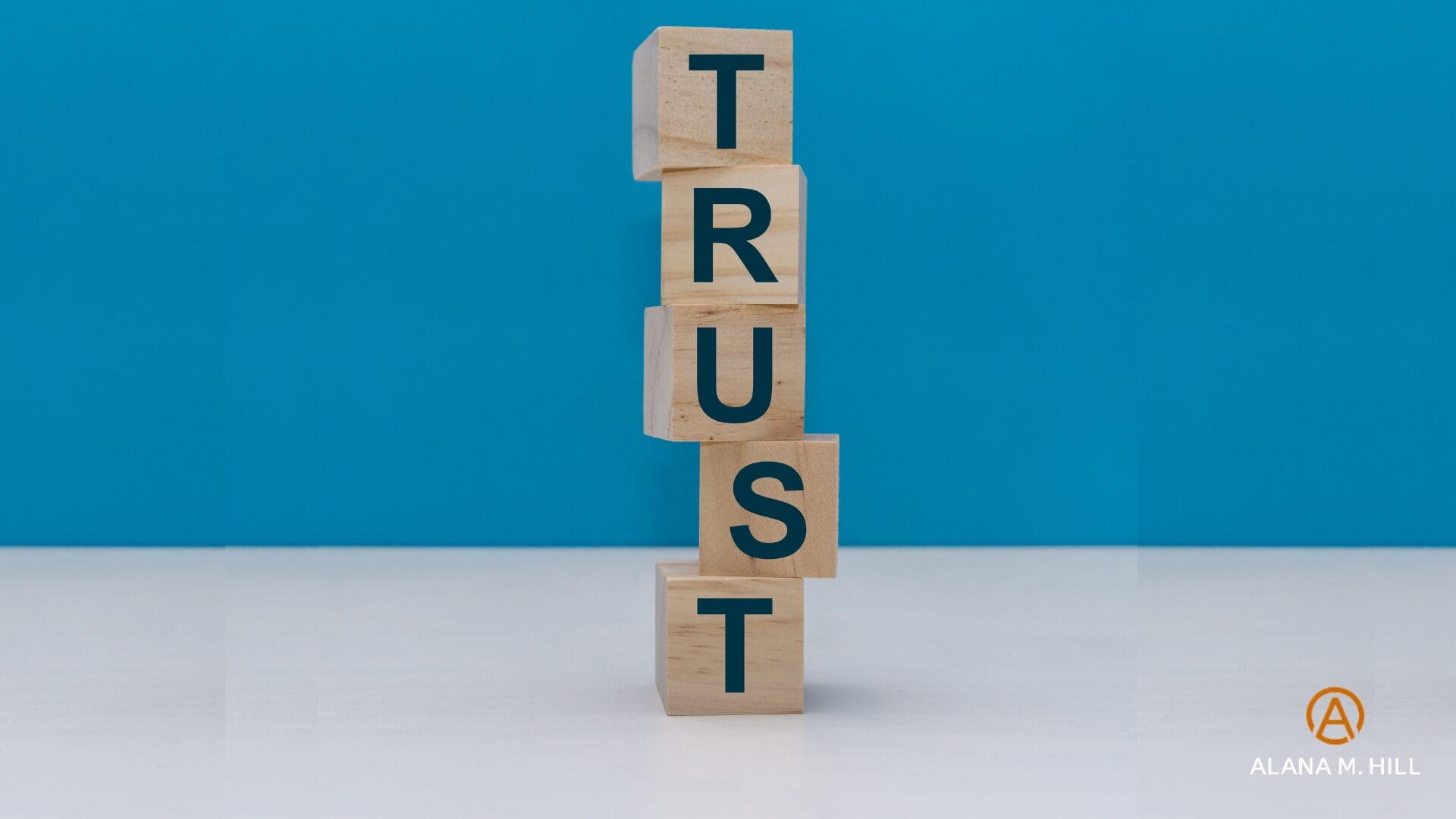
“Trust is like building blocks—if you knock it down, you have to rebuild it. So handle with care.”
Control Doesn’t Create Trust—Clarity Does
When leaders feel pressure, many default to control. In high-stakes environments, I understand why. No one wants mistakes.
But if your team won’t move unless you say “move,” you don’t have a high-performing team—you have dependency.
Micromanagement may feel like safety, but it’s expensive. It’s the Trust Tax in real time: energy drained, initiative lost, innovation stalled.
The alternative isn’t chaos. The alternative is clarity:
-
clear expectations
-
shared standards
-
agreed-upon ways of working
-
accountability people commit to (not just comply with)
Because compliance happens when someone is watching.
Commitment happens when trust is present.
Rules Without Relationship Equals Rebellion
When newer leaders ask me how to handle difficult conversations—especially the first one—my first answer is simple:
Build the relationship.
Not so you can avoid hard conversations. So the hard conversations can be received.
One of the fastest ways to create resistance is to enforce rules without connection. As I often say:
Rules without relationship equals rebellion.
Trust is what makes truth-telling possible. Without trust, feedback feels like a threat. With trust, feedback becomes leadership.
Three Ways Leaders Reduce the Trust Tax
Here are three trust-building moves that reduce friction and increase performance—without needing a massive initiative.
1) Model integrity in small ways
Trust grows when people see consistency.
Your yes needs to be your yes. Your no needs to be your no. Your standard needs to stay your standard—whether you’re caffeinated or not.
Teams watch what you tolerate. And culture is shaped by the worst behavior you allow.
2) Move from tolerance to appreciation
Tolerance says, “I’ll put up with you.”
Appreciation says, “You belong here.”
When people feel seen, they contribute more. When they fear judgment, they shrink. And when people shrink, organizations lose ideas, innovation, and engagement.
3) Make trust actionable
Trust isn’t a slogan. It’s a practice.
If you want a more trusting culture, ask:
-
What does trust look like on this team—day to day?
-
What behaviors build trust here?
-
What behaviors erode it?
-
What are 3 actions we will implement—and how will we measure them?
If you measure what matters, you can manage what matters.
The Bottom Line
Trust is not a feel-good leadership concept.
Trust is a business driver.
Trust is a retention strategy.
Trust is an innovation catalyst.
And when trust is low, you will pay for it—through turnover, inefficiency, disengagement, and avoidable conflict.
That’s the Trust Tax.
But when you lead from trust—with clarity, integrity, and care—you don’t just reduce costs.
You raise capacity.
And in healthcare, capacity isn’t optional. It’s everything.